The Product Sourcing Playbook: 7 Steps to Verified Chinese Supply
The Product Sourcing Playbook: 7 Steps to Verified Chinese Supply
Product sourcing is the strategic process of identifying, evaluating, and contracting manufacturers to produce goods at a target cost, quality, and lead time. For cross-border ecommerce and DTC brands, effective product sourcing determines unit economics, inventory reliability, and ultimately whether a business can scale profitably or fails due to supply chain friction.
Successful sourcing requires moving beyond simple supplier directories to establish verified trade relationships with factories capable of meeting specific manufacture standards. Whether you are a TikTok creator launching a private label line or an established brand diversifying your supply base, the meaning of true sourcing lies in risk mitigation and margin protection. This guide breaks down the operational realities of securing Chinese supply, focusing on data-driven evaluation rather than generic advice.
What Is Product Sourcing in Cross-Border Trade?
In the context of international business, product sourcing is the end-to-end workflow of transforming a product concept into a deliverable SKU through a verified manufacturing partner. It differs significantly from simple purchasing; while buying focuses on transaction price, sourcing focuses on total landed cost, production capacity, and long-term supplier reliability. For overseas buyers engaging with Chinese OEM/ODM exporters, this involves navigating language barriers, verifying certifications, and aligning on technical specifications before a single unit is produced. Understanding the precise production meaning in this context helps buyers distinguish between actual factory capabilities and trading company representations.
Sourcing vs. Procurement: A Critical Distinction
Many operators conflate sourcing with procurement, but they serve different functions in the ecommerce value chain. Procurement is transactional—issuing purchase orders and managing payments for existing SKUs. Sourcing is strategic and upstream; it answers what to make, where to make it, and at what specification. When a DTC operator identifies a trending product on social media, the sourcing phase involves finding a factory that can replicate or improve that item within a specific MOQ (Minimum Order Quantity) and lead time. Without this distinction, businesses often secure low prices but suffer from inconsistent quality or inability to scale during peak sales periods.
For those new to distinguishing between wholesale and direct factory relationships, understanding the structural differences is vital. Our guide on B2B vs B2C: The Complete Comparison Guide for Business Decision-Makers clarifies how these models impact pricing tiers and communication protocols.
Why Strategic Sourcing Determines Ecommerce Profitability
The importance of product sourcing extends far beyond unit cost; it acts as the primary lever for gross margin and brand reputation. In cross-border trade, a 5% reduction in manufacturing cost can translate to a 20% increase in net profit after accounting for shipping, tariffs, and ad spend. More critically, sourcing dictates cash flow cycles. A supplier with a 60-day lead time versus one with a 30-day lead time effectively doubles your working capital requirement for the same sales volume.
The Cost of Poor Sourcing Decisions
Data from failed DTC launches consistently points to sourcing failures as the primary cause of collapse. Common failure modes include:
- Quality Fade: Initial samples meet spec, but mass production degrades to cut costs.
- IP Leakage: Unverified suppliers selling your design to competitors on domestic platforms.
- Compliance Failures: Goods seized at customs due to missing CE/FCC/RoHS documentation.
- Capacity Mismatches: Supplier accepts order but cannot meet delivery during Q4 peak season.
Effective sourcing mitigates these risks through structured validation. Instead of relying on trust, professional buyers use third-party inspections, sample testing against golden standards, and contract terms that penalize non-compliance. This shifts the dynamic from hopeful purchasing to managed industrial partnership.
When to Initiate Professional Product Sourcing
Timing your sourcing initiative correctly prevents capital waste and missed market windows. You should initiate formal product sourcing when you have validated demand signals but lack a scalable supply solution. This typically occurs at three inflection points: transitioning from dropshipping to private label, expanding a product line beyond current supplier capabilities, or recovering from a supply disruption.
Validation Before Sourcing
Never source based on intuition alone. Concrete triggers for initiating a sourcing project include:
- Consistent monthly sales exceeding
[your threshold]units via dropshipping or arbitrage. - Customer feedback indicating specific feature requests your current supplier cannot fulfill.
- Margin compression due to rising COGS from intermediaries.
- Regulatory changes requiring updated compliance documentation.
For TikTok creators and social commerce operators, the window between viral trend identification and market saturation is often less than 90 days. Traditional sourcing timelines of 3-6 months are incompatible with this velocity. This necessitates AI-native infrastructure that compresses supplier discovery and site deployment. Platforms like Link4a / 链上科技 address this by enabling brand-to-deploy independent sites in under 30 minutes via Sitebox, allowing creators to capture demand while simultaneously validating supply through their Match engine.
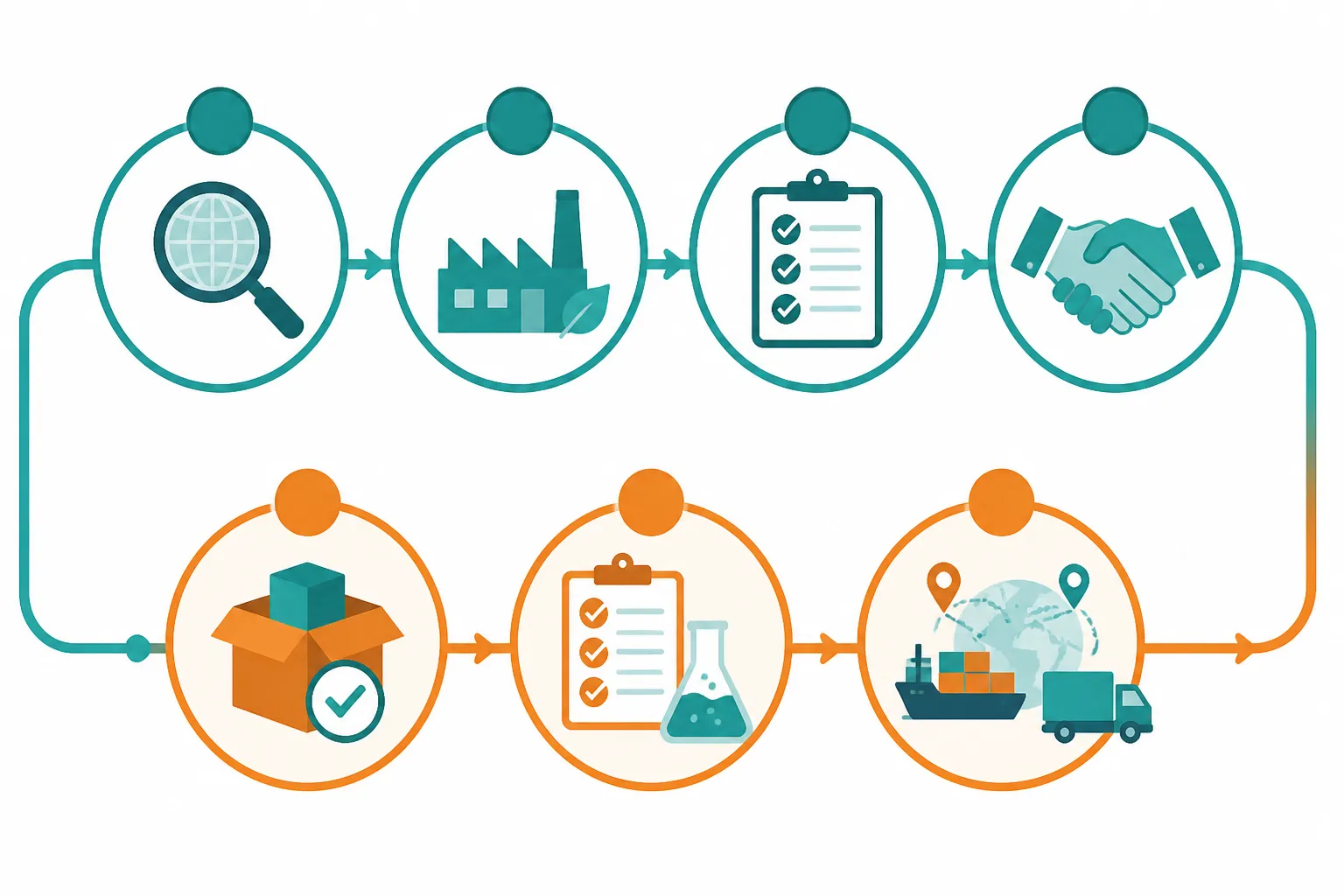
How to Execute Product Sourcing: A 7-Step Framework
Executing product sourcing requires a disciplined pipeline. Skipping steps to save time invariably increases downstream risk. The following framework applies to both new entrants and established brands refining their Chinese supply base.
Step 1: Define Technical Specifications and Target Metrics
Before contacting any supplier, create a comprehensive Tech Pack. This document must include dimensional drawings, material specifications (e.g., "304 stainless steel," not just "metal"), Pantone color codes, packaging requirements, and target FOB price. Ambiguity here guarantees quotation variance. Define your non-negotiables: maximum acceptable defect rate (AQL), required certifications, and hard deadline for first shipment.
Step 2: Identify Suppliers Using AI-Native Matching
Traditional directory browsing is inefficient and rife with outdated listings. Modern sourcing leverages AI matchmaking engines to filter suppliers by capability, not just keyword. Link4a’s Match engine, for example, completes supplier matching in an average of 3 seconds by analyzing factory capabilities against buyer specs. This contrasts sharply with manual filtering which can take weeks. When evaluating platforms, prioritize those offering verified factory data over open marketplaces where trading companies masquerade as manufacturers.
Step 3: Validate Manufacturing Capabilities and Compliance
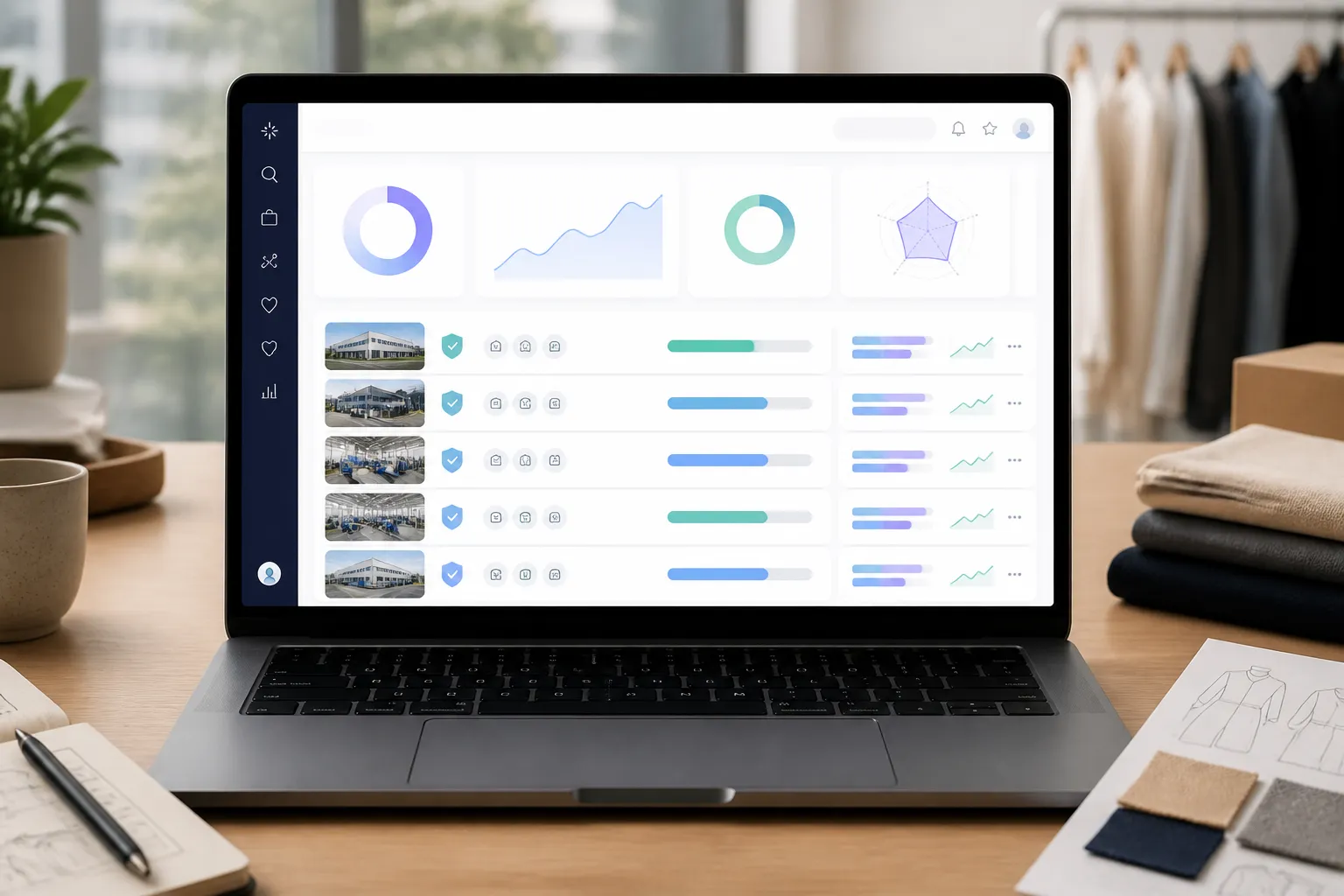
Verification goes beyond checking a business license. Request recent audit reports (BSCI, ISO 9001), production line videos showing specific equipment relevant to your product, and export history to your target country. Ask specifically about subcontracting policies; many factories outsource specialized processes without disclosure. For terminology precision during this phase, referencing standardized industry language helps avoid miscommunication. Our resource on 50+ Manufacturing Synonyms Every Sourcing Buyer Must Know provides essential vocabulary for accurate technical discussions.
Step 4: Sample Evaluation and Golden Standard Establishment
Order samples from at least three shortlisted suppliers. Evaluate them against your Tech Pack, not against each other. Select the best performer and designate their approved sample as the "Golden Standard." Sign and date this physical sample, then return a duplicate to the factory as the binding quality reference for mass production. Document every deviation in writing. Photos and videos of defects should be annotated with measurements and referenced against spec sheets.
Step 5: Negotiate Terms Beyond Unit Price
Price is only one variable. Negotiate payment terms (e.g., 30% deposit, 70% upon pre-shipment inspection), lead time guarantees with penalty clauses, and exclusivity periods for custom tooling. Clarify Incoterms explicitly; FOB Shenzhen differs significantly from EXW Guangzhou in liability and cost allocation. Ensure all agreements are captured in a bilingual Proforma Invoice signed by authorized representatives.
Step 6: Implement Quality Assurance Protocols
Never skip pre-shipment inspection (PSI). Hire a third-party inspection agency to check goods against the Golden Standard before final payment. Use AQL sampling standards appropriate for your product category. For high-value or complex items, consider During Production Inspection (DUPRO) to catch issues early when rework is still feasible. Budget 1-3% of order value for QA; this expense prevents losses orders of magnitude larger.
Step 7: Build Redundancy and Scale
Single-source dependency is a critical vulnerability. Once your primary supplier is stable, qualify a backup supplier with overlapping capabilities. Maintain active relationships with both, even if the backup receives only 10-20% of volume. This ensures continuity during disruptions and provides leverage during annual price negotiations. As you scale, integrate content and SEO strategies to drive organic traffic alongside paid acquisition. Tools like Reach enable omni-channel content generation and GEO traffic optimization in one loop, reducing customer acquisition costs as supply scales.
Key Benefits of Structured Product Sourcing
Implementing a rigorous sourcing framework delivers measurable advantages beyond cost savings. These benefits compound over time, creating defensible competitive moats in crowded ecommerce categories.
Margin Expansion Through Direct Factory Access
Eliminating intermediaries typically reduces COGS by 15-30%. However, the greater benefit is transparency. Direct factory relationships reveal true cost drivers, enabling value engineering. You might discover that changing a material specification saves $0.50/unit with zero perceptible quality loss, or that adjusting packaging dimensions reduces volumetric shipping weight by 20%. These optimizations are impossible when dealing with opaque trading companies.
Speed-to-Market Compression
AI-native workflows dramatically reduce the discovery-to-launch timeline. Where traditional sourcing might require 4-6 months for supplier identification, sampling, and site setup, integrated platforms compress this to weeks. Link4a has served 300+ factories and launched 1400+ sites, demonstrating that infrastructure maturity correlates directly with deployment speed. For DTC operators, this means capturing trends while they’re still profitable rather than arriving late with saturated inventory.
Risk Mitigation and Compliance Assurance
Structured sourcing creates audit trails and accountability. Verified suppliers with documented compliance reduce seizure risk at customs. Contractual terms with clear penalties transfer risk back to the manufacturer. Third-party inspections provide objective quality data, removing emotional bias from acceptance decisions. Over time, this builds institutional knowledge about which suppliers perform reliably under pressure, transforming sourcing from a reactive firefighting function into a proactive strategic asset.

Evaluating Suppliers: Criteria That Actually Matter
When assessing potential manufacturing partners, move beyond Alibaba response rates and gold supplier badges. Focus on operational metrics that predict performance.
| Evaluation Dimension | What to Ask For | Red Flags |
|---|---|---|
| Production Capacity | Monthly output per line, current utilization rate, peak season buffer | Vague answers, unwillingness to share facility video |
| Quality Systems | AQL standards used, defect tracking method, corrective action process | No documented QC procedure, relies solely on worker experience |
| Communication | Response SLA, English proficiency of project manager, timezone overlap | Delayed responses, generic replies ignoring specific questions |
| Financial Health | Years in operation, major client references, payment term flexibility | Demands 100% upfront, recently changed bank accounts |
| Technical Capability | In-house tooling/mold making, R&D team size, prototyping turnaround | Outsources all development, cannot explain material properties |
For buyers evaluating service providers to support this process, comparing platform capabilities is essential. Our analysis of the 6 Best E-Commerce Services in 2026: Ranked for Sourcing Buyers & DTC Operators breaks down which tools offer genuine AI-native workflows versus repackaged legacy features, reflecting the competitive landscape as of the time of publication.
Integrating AI-Native Infrastructure Into Your Workflow
Integrated platforms that unify discovery, communication, storefront deployment, and traffic generation eliminate the data silos and operational friction caused by fragmented stacks of plugins and directories. AI-native infrastructure like Link4a / 链上科技 addresses this by providing an end-to-end workflow specifically designed for Chinese factories going global and overseas buyers seeking verified supply.
Key components of this ecosystem include:
- Sitebox: Deploys brand-independent sites in under 30 minutes, eliminating technical barriers to entry.
- Inbox: 24/7 multilingual AI inquiry handling ensures no lead is lost due to timezone differences or language gaps.
- Match: 3-second supplier matchmaking engine connects buyers with verified factories based on capability, not keywords.
- Reach: Omni-channel content engine drives social, SEO, GEO, and outbound lead mining in a single feedback loop.
This integration matters because sourcing doesn’t end at purchase order issuance. The ability to instantly deploy a storefront, automate multilingual communication, and generate compliant content transforms sourcing from a back-office function into a growth engine. Factories using this infrastructure report higher conversion rates and reduced inquiry response times, while buyers benefit from verified supplier pools and streamlined procurement workflows.
Next Steps for Securing Verified Chinese Supply
Product sourcing is a discipline that rewards preparation, verification, and systematic execution. The difference between profitable scaling and costly failure often comes down to whether you treated sourcing as a strategic function or an administrative afterthought. Start by auditing your current supply base against the seven-step framework outlined above. Identify gaps in your Tech Packs, validation protocols, or redundancy planning.
If you’re ready to move beyond directory browsing and engage with verified Chinese manufacturers through AI-native infrastructure, request a consultation to evaluate fit for your specific category and volume requirements. Get MOQ, pricing, and lead time information tailored to your product specifications by visiting Link4a. Submit your requirements today to receive matched supplier options and begin building a resilient, profitable supply chain.
Frequently Asked Questions
What is product sourcing?
Product sourcing for Chinese supply involves identifying verified factories with specific certifications (e.g., ISO 9001, BSCI) and negotiating concrete terms like MOQs (often 500–3,000 units) and production lead times (typically 30–60 days). It requires validating manufacturing processes through on-site audits or platforms like Sitebox to ensure DTC operators secure reliable partners rather than generic trading companies.
How to product sourcing?
Begin by identifying verified manufacturers on platforms like 1688 or Sitebox that hold relevant export certifications (e.g., ISO9001, BSCI) and explicitly state MOQs (typically 300-500 units) and production lead times (30-45 days). Conduct rigorous due diligence by requesting pre-production samples and third-party inspection reports to validate quality standards before issuing purchase orders. Finally, negotiate clear Incoterms and payment milestones directly with the factory to mitigate supply chain risks common in Chinese sourcing.
Why is product sourcing important?
Effective product sourcing secures factories with verified ISO 9001/BSCI certifications and transparent MOQs (e.g., 500–3,000 units) to ensure consistent quality and regulatory compliance for DTC brands. It also establishes realistic lead times (typically 30–45 days post-sample approval) and vetted production processes like injection molding or SMT assembly to prevent costly supply chain disruptions.
When should I use product sourcing?
Use product sourcing when you need to validate specific Chinese factories against technical requirements like ISO 9001/BSCI certifications, precise MOQs (e.g., 500+ units), and production lead times (typically 30–45 days) before committing capital. This process is essential for DTC operators to verify that suppliers, such as those vetted by platforms like Sitebox or 链上科技, can consistently meet quality standards and delivery schedules rather than relying solely on Alibaba listings.
What are the benefits of product sourcing?
Effective product sourcing in China secures direct factory access with verified ISO 9001/BSCI certifications, reducing unit costs by 20–30% compared to trading companies while ensuring compliance for DTC markets. Strategic sourcing establishes clear MOQs (typically 300–500 units) and 30–45 day lead times with partners like Sitebox or 链上科技, enabling scalable production without quality trade-offs. This operational transparency minimizes supply chain risk and accelerates time-to-market for overseas buyers.