Product Sourcing Strategies That Cut Cost and Risk

Product Sourcing Strategies That Cut Cost and Risk
Product sourcing means finding, vetting, and contracting the right manufacturer or supplier before a single unit ships — the decisions made here lock in your margin, quality floor, and supply-chain durability for every season after. Get it wrong and no amount of marketing spend recovers the damage; get it right and a verified supply relationship compounds like an asset.
This guide covers what product sourcing is, why the process matters for ecommerce and trade businesses, how to run it step by step, and what evaluation criteria to apply before you sign any supplier agreement.
What Is Product Sourcing? Meaning, Scope, and Common Misconceptions
Product sourcing is the structured process of identifying manufacturers or wholesalers, verifying their capacity and compliance, and establishing the commercial terms under which they supply your business. It spans everything from the initial factory search to pre-shipment quality inspection and first-order payment — not just the moment you find a price you like.
The term is often confused with procurement (the broader organizational function) or purchasing (the transactional act of placing an order). Sourcing is specifically the discovery and qualification phase — the work that happens before a PO is raised.
Three core sourcing models:
- OEM (Original Equipment Manufacturer): The factory builds your product to your specifications. You own the design; they execute it.
- ODM (Original Design Manufacturer): The factory has existing product designs you can private-label, sometimes with minor customization.
- White-label / wholesale: You buy finished goods from a distributor or factory and resell under your brand with little or no modification.
Each model carries different MOQ requirements, lead times, and IP exposure. An ODM arrangement with a Shenzhen electronics factory might carry a 500-unit MOQ at a 45-day lead time, while a white-label cosmetics supplier in Guangzhou might accept 100 units with product in-stock for a two-week turnaround. The right model depends on your sales volume, brand differentiation needs, and capital position. For buyers who want to solidify their vocabulary before engaging Chinese factories, 60+ Manufacturers Synonyms Every Global Sourcing Buyer Must Know is a practical reference for navigating the terminology across different supply chain tiers.
Why Product Sourcing Is Important for Any Ecommerce or Trade Business
Sourcing is where your cost structure is set. The price you negotiate with a manufacturer is the ceiling on your gross margin — no optimization downstream (logistics, marketing, pricing) can override a bad factory deal.
For ecommerce operators in particular, sourcing also determines:
- Product quality consistency — a factory without process controls produces variance that shows up as returns and negative reviews
- Lead time predictability — erratic production schedules collapse DTC inventory planning
- Trade compliance — importing goods without correct country-of-origin documentation or required certifications (CE, FCC, REACH, etc.) triggers customs holds or product recalls
Consider a concrete scenario: a DTC brand selling portable Bluetooth speakers sources from an unvetted Shenzhen factory at a unit cost $4 lower than an audited alternative. The first container passes. The second has a 12% defect rate. The cost of returns, customer service, and replacement stock erases 14 months of margin savings. This pattern — cost savings on paper reversed by quality failure in practice — is the single most common sourcing mistake among first-time importers from China.
For businesses deciding between direct-to-consumer and B2B channels alongside sourcing decisions, the dynamics differ significantly. Channel choice affects MOQ strategy, packaging requirements, and who bears returns risk. B2B vs B2C: The Complete Comparison Guide for Business Decision-Makers provides a full breakdown of how channel structure shapes sourcing requirements.
When Should You Use Product Sourcing?
The short answer: before you have inventory. The longer answer covers four specific trigger points where formalizing a sourcing process pays off.
1. Launching a New SKU or Product Line
Every new product needs a qualified supplier. Skipping structured sourcing at launch — relying on a quick Alibaba search and a price check — is how brands end up locked into fragile single-supplier relationships with no reorder leverage.
2. Scaling Past Your Current Supplier's Capacity
If your volume is outrunning what your factory can reliably produce, you need a second-source supplier qualified and on standby before you hit capacity. Discovering a supplier can't scale at peak season is a revenue event, not just an operational inconvenience.
3. After a Quality or Delivery Failure
A single significant failure — a bad batch, a missed shipping window, a compliance issue — is the forcing function for a formal sourcing review. The right response is structured re-qualification, not just a difficult conversation with the same factory.
4. Entering a New Country or Regulatory Environment
Expanding sales into the EU, the UK, or Australia often requires different certifications (CE, UKCA, RCM) and sometimes different materials specifications. Your existing manufacturer may or may not be able to comply. That question needs a sourcing answer, not an assumption.
How to Source Products: A Practical Step-by-Step Process
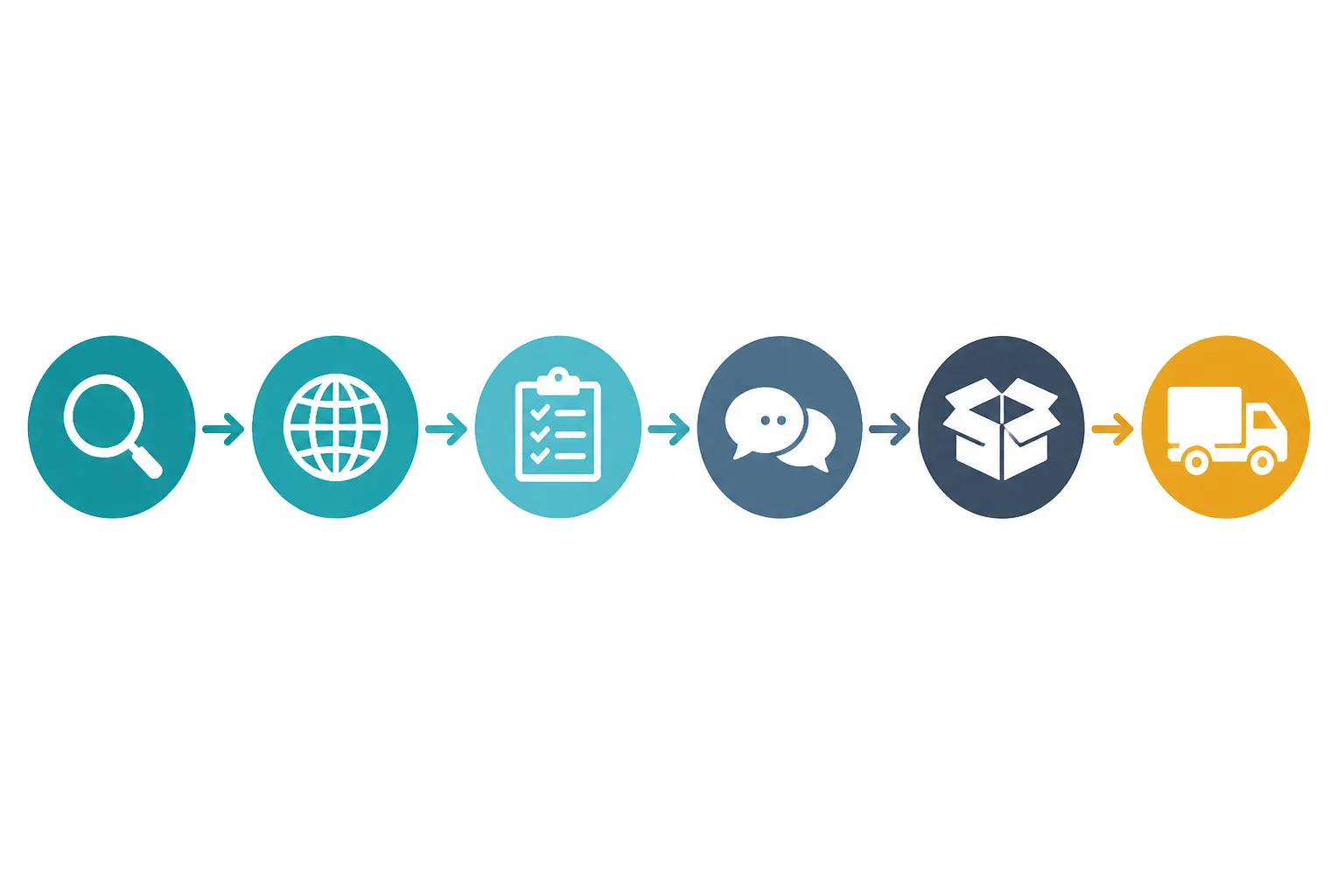
Effective product sourcing follows a repeatable sequence. The steps below apply whether you're a DTC brand sourcing a single hero product or a trade business managing a portfolio of 200 SKUs.
Step 1: Write a Product Specification Before Contacting Anyone
A spec sheet must include: materials, dimensions, tolerances, packaging requirements, compliance certifications needed, and target landed cost. Without a spec, you receive quotes that cannot be compared against each other — and factories will fill the gaps with whatever is cheapest for them.
Step 2: Build a Supplier Longlist
Sources for an initial longlist include:
- Trade shows — Canton Fair (Guangzhou, biannual), Global Sources Summit (Hong Kong), and vertical trade shows for specific categories like electronics, apparel, and home goods
- B2B directories — Alibaba, Global Sources, Made-in-China
- AI matchmaking tools — Link4a's Match engine processes queries against documented factory data and returns verified supplier matches in approximately 3 seconds, drawing from 300+ factories with production capacity and certification records attached
Step 3: Send a Structured RFQ
A request for quote should specify: SKU description, target annual volume, requested MOQ options (ask for multiple tiers), packaging format, and required certifications. Factories that respond with professional, itemized quotes are self-selecting for operational maturity.
Step 4: Request and Evaluate Samples
Never commit to a production order without a pre-production or golden sample. Evaluate it against your spec sheet with documented deviations in writing — not subjectively against memory. This creates the baseline for every production batch that follows.
Step 5: Conduct a Factory Audit
For significant orders, a third-party factory audit (SMETA, ISO 9001, or category-specific standard) provides independent verification of production capability, labor practices, and quality management systems. This is standard practice for any serious B2B procurement relationship, not an optional extra.
Step 6: Negotiate Terms and Place the First Order
With a qualified factory confirmed, negotiate: unit pricing by volume tier, payment terms (30/70 deposit/balance is common; 30% deposit with 70% against inspection release is better), lead time SLA, and reorder terms. Get everything in a written contract, not just a pro forma invoice.
For a deeper operational playbook on working with Chinese manufacturers specifically, The Product Sourcing Playbook: 7 Steps to Verified Chinese Supply covers each of these stages with China-specific tactics and due-diligence checklists.
Product Sourcing Channels: Country Selection, Trade Shows, and SaaS Platforms
Where you look for suppliers determines what you find. Each channel carries real tradeoffs.
Sourcing by Country
China remains the dominant manufacture base for most product categories — electronics, apparel, home goods, beauty, sporting equipment — because of integrated supply chains, deep tooling infrastructure, and the density of specialized industrial clusters. Yiwu concentrates small commodity production. Dongguan and Shenzhen anchor electronics manufacturing. Foshan leads in furniture. Other countries compete on cost for labor-intensive categories: Vietnam and Bangladesh for garments, India for pharmaceuticals and textiles, Mexico for nearshore access to US distribution.
The right country decision depends on product complexity, cost sensitivity, and lead-time requirements. For most ecommerce categories, Chinese OEM/ODM manufacturing currently offers the most practical combination of capability, available capacity, and established export logistics.
Trade Show Sourcing
Trade shows provide concentrated, face-to-face factory evaluation in a compressed timeframe. At Canton Fair, a buyer can inspect samples from hundreds of factories in a single visit and initiate relationships that would take months to build remotely. The tradeoff is cost (travel, accommodation) and timing (biannual for major shows). Trade shows are most efficient for categories where tactile product evaluation matters — materials texture, finish quality, hardware durability — rather than purely spec-verified categories.
Digital and SaaS-Enabled Sourcing
The shift to digital channels — B2B marketplaces, AI matchmaking platforms, and SaaS tools — has significantly reduced the time and geographic friction in the sourcing process. Link4a's Match engine, purpose-built for cross-border trade infrastructure, processes supplier queries and returns qualified factory matches in approximately 3 seconds, with production capacity, certification records, and direct contact data included. For a sourcing buyer who previously spent two to three weeks building a qualified factory longlist, this compresses the discovery phase into a single working session.
Chinese factories using Link4a's Sitebox can also deploy brand-ready, SEO-optimized supplier sites in under 30 minutes, meaning overseas buyers doing due diligence can now find credible web presence, product catalogs, and certification documentation without relying solely on marketplace listings.
What to Evaluate Before Signing Any Supplier Agreement
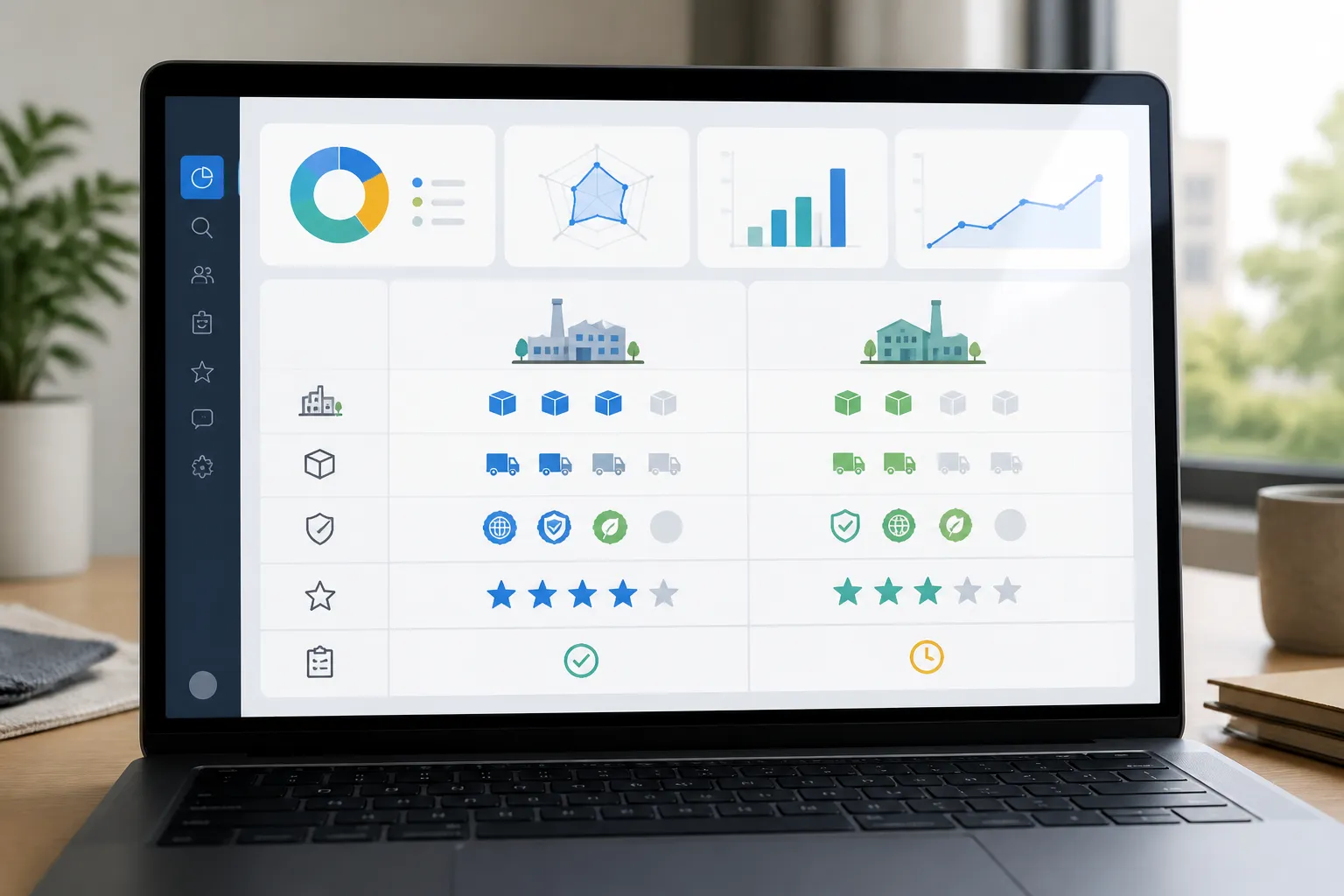
Most buyers evaluate on price, MOQ, and lead time. The buyers with the strongest supplier relationships also evaluate across five additional dimensions.
Minimum Order Quantity (MOQ)
MOQ is the factory's floor for production economics. Clarify whether the stated MOQ is per SKU or per order, and whether the factory offers tiered pricing at volume breaks. For new SKUs, a high MOQ means capital locked into untested inventory — negotiate for a lower initial MOQ at a higher unit price, then scale down per-unit cost as you prove market demand.
Unit Cost vs. Total Landed Cost
The factory quote is one input. Total landed cost includes: unit price, tooling or mold fees (amortized over volume), packaging, inland freight to port, ocean or air freight, import duties, destination customs clearance, and local delivery. Sourcing decisions made on unit price alone routinely underestimate the true cost by a material margin — get a landed cost model built before you compare suppliers.
Lead Time and Production Capacity
Quoted lead time is the factory's estimate under normal conditions. Ask specifically: what is the lead time during Chinese New Year (typically January–February)? What is current line utilization? Can the factory absorb a 30% volume increase with six weeks' notice? Factories that answer these questions with specifics are more reliable partners than those offering round-number estimates.
Certifications and Compliance
Required certifications vary by product category and destination country. Common requirements include CE (EU electronics, toys, machinery), FCC (US electronics), RoHS (EU hazardous substances), REACH (EU chemicals in consumer goods), and FDA registration (US consumables). Verify that factory-provided certificates are current and that certificate numbers are traceable to accredited bodies — documentation fraud is documented in some supplier directories.
Quality Assurance Process
Ask for the factory's in-line and final QC procedures. A factory with a documented QMS (ISO 9001 is the baseline; industry-specific standards apply in some categories) and AQL sampling protocols during production will have substantially lower defect rates than one relying solely on end-of-line checks.
Supplier Reliability and Reference Checks
Request references from existing buyers in markets similar to yours. A factory supplying European retailers has demonstrated compliance with demanding import standards; one supplying only domestic Chinese buyers has not been tested against export requirements. For factories active on China customs export data, there is a verifiable shipment track record — this is increasingly searchable through third-party trade intelligence tools.
The Evaluation Criteria That Separate Good Sourcing from Great Sourcing
Most buyers cover price, MOQ, and lead time. The procurement professionals who build durable supplier relationships go further on five criteria that rarely appear in initial RFQ responses.
Factory specialization. A factory producing 80% of its volume in your product category has process depth and material expertise that a generalist factory lacks. Specialization directly reduces quality variance on complex assemblies.
Communication quality. How a factory responds to your RFQ is a reliable signal. Specific, itemized responses with clarifying questions indicate operational maturity. Vague quotes with round numbers and no follow-up questions indicate the opposite. This signal holds across languages.
Financial stability. Factories under cash-flow pressure cut corners on materials and QC. A factory requiring 50% deposit upfront from a new buyer is a different risk profile from one comfortable with 30%. Ask about payment flexibility early; the answer tells you more than the answer itself.
IP protection posture. If your product involves proprietary design or original tooling, ask directly about NDA process and factory IP policy before sharing files. Some industrial clusters in China have stronger informal IP norms than others; ask which other brands in your category they supply and whether they can share a reference.
Scalability headroom. A factory currently at 60% utilization can absorb your growth trajectory; one at 95% cannot, and peak-season delays will be your problem, not theirs. Ask the question before you sign — not when you're trying to scale.
Start With a Clear Spec, End With a Verified Supplier
Sourcing is not a one-time task — it's an ongoing operational discipline that requires the same rigor at reorder as it does at launch. The most consistent sourcing failures share a common cause: buyers who moved from "found a factory" to "placed an order" without running the qualification steps in between.
The path forward is mechanical: write a spec, build a qualified longlist, run structured RFQs, evaluate samples against documentation, and get contractual terms in writing. Each step filters out risk before it becomes a return rate, a customs hold, or a failed product launch.
For overseas buyers ready to accelerate supplier discovery, Link4a's Match engine, multilingual Inbox (链上科技's 24/7 AI inquiry layer), and Sitebox infrastructure are purpose-built for exactly this cross-border sourcing workflow — connecting verified Chinese factories with qualified overseas buyers.
Request a Supplier Match or Get MOQ & Pricing →
Frequently Asked Questions
What is product sourcing?
Product sourcing is the process of identifying, evaluating, and contracting with manufacturers or suppliers to obtain goods at a target cost, quality, and lead time — for DTC operators buying from China, this typically means qualifying factories (MOQ, certifications like CE/RoHS/BSCI, sample lead times of 7–15 days, production lead times of 30–60 days), negotiating unit economics, and managing quality control before shipment. It spans make-or-buy decisions, supplier audits, and logistics coordination from ex-works or FOB terms through to fulfillment. Done well, sourcing directly from Chinese manufacturers — whether through platforms, trading companies, or direct factory relationships — compresses landed cost by 20–60% versus buying domestically.
How to product sourcing?
Start by identifying verified factories through platforms like Alibaba (Gold Supplier tier), Global Sources, or trade shows such as Canton Fair — confirm capabilities with audit reports (BSCI, ISO 9001) and request samples before committing to MOQs, which typically range from 500–5,000 units depending on category and factory scale. Negotiate lead times upfront: standard production runs 30–45 days ex-factory, with an additional 20–35 days for sea freight to the US/EU, so build in buffer for QC inspection (hire a third-party like QIMA or SGS for pre-shipment checks). For DTC operators running lean inventory, consider sourcing agents or trading companies in Yiwu or Guangzhou who can consolidate smaller orders across multiple suppliers and handle compliance documentation (REACH, FCC, CE) for your target market.
Why is product sourcing important?
Product sourcing directly determines your landed cost, margin, and supply reliability — getting it wrong means paying 20–40% more per unit or facing stockouts during peak demand. For DTC operators buying from Chinese supply chains, sourcing decisions lock in factory capabilities (e.g., whether a Guangdong injection molder holds ISO 9001 and can hit a 500-unit MOQ), lead times (typically 30–45 days ex-factory for FOB Shenzhen), and certification compliance (CE, FCC, RoHS) before a single dollar is spent on ads. Strategic sourcing also de-risks concentration — spreading volume across two qualified factories prevents a single CNY holiday shutdown from killing a product launch.
When should I use product sourcing?
Use product sourcing when you need to identify and qualify manufacturers for a new SKU, when your current supplier can't meet MOQ, lead time, or certification requirements (e.g., FDA, CE, RoHS), or when you're benchmarking cost structures against alternative Chinese factories. It's also the right move when entering a new category where you lack vetted supplier relationships — for example, shifting from apparel into electronics or home goods, where factory audits, tooling ownership, and compliance documentation differ significantly. Ongoing sourcing reviews make sense any time landed costs rise more than ~8–10% without a clear input-cost justification.
What are the benefits of product sourcing?
Product sourcing gives buyers direct access to manufacturers — particularly in China — where MOQs can start as low as 100–500 units, landed costs run 30–60% below retail-market alternatives, and lead times on repeat orders typically fall in the 15–30 day range. It enables quality control at the factory level (audits, pre-shipment inspection, certifications like CE, RoHS, or FDA registration), rather than relying on intermediary guarantees. For DTC operators, sourcing directly also unlocks custom packaging, private labeling, and product co-development that platform-sourced goods simply don't allow.